Do both partners need to be in the same room for online couples therapy?
By Ferhat Açıkalın · · 5 min read · Online couples therapy
Grounded in the Gottman Method, the same approach your guide works from.
On this page
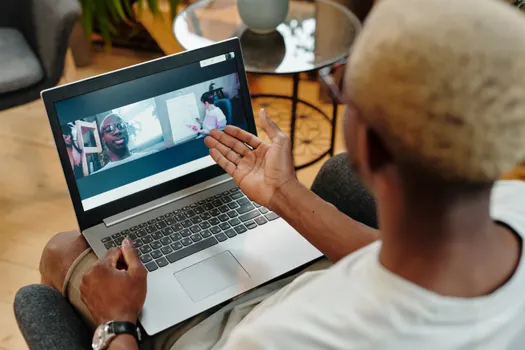
No, both partners do not need to be in the same room for online couples therapy. Many therapists encourage joining from separate locations, especially if being together makes it harder to speak honestly. You can each log in from your own device, whether you're in different rooms of the same house or in entirely different cities.
Why you might want to be in separate rooms
There are good reasons to consider separate spaces:
- Honest communication: Some topics are easier to discuss when you're not looking directly at your partner. A separate space can help you speak more freely.
- Privacy: If you live with others, each partner can find a quiet spot without worrying about being overheard.
- Technical ease: Two devices mean each person can see and hear clearly, without sharing a camera or dealing with background noise.
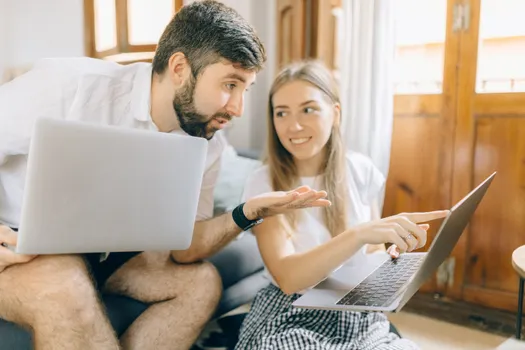
That said, some couples prefer being in the same room to feel connected or to share a screen. Both setups are fine, it's about what helps you both feel safe and engaged.
What to consider when joining separately
If you decide to log in from different places, keep these things in mind:
- Reliable internet: Both of you need a stable connection so you don't miss parts of the session.
- Private space: Make sure you won't be interrupted. Headphones can help.
- A laptop or tablet if you can: Using a laptop or tablet with a good camera works better than a phone, but phones are okay if that's all you have.
- No distractions: Turn off notifications and close other tabs. This is your time together.
How therapists handle separate locations
Most therapists are used to this setup. They'll typically:
- Start by checking that both of you are comfortable and can hear each other.
- Encourage each partner to speak directly to the therapist, but also to each other when needed.
- Ask you to speak to your partner directly at key moments, looking at their video rather than at the therapist. In Emotionally Focused Therapy this is called an enactment, and it works through a screen too.
If you're worried about feeling disconnected, you can always try a few sessions in separate rooms and then switch to being together. There's no wrong way.
What if we live in different cities?
Online couples therapy is a great option for couples who are temporarily or long-distance. As long as both of you are in a location where the therapist is licensed to practice (check state or country rules), you can join from anywhere. Licensing across state lines depends on the therapist's profession and state, so it's worth asking.
When separate rooms matter for safety
If you do not feel safe saying what is true with your partner nearby, or you are afraid of how they will react after the session, tell the therapist privately before the first joint session. Many couples therapists ask to speak with each partner alone early on for exactly this reason. Couples therapy is generally not recommended where there is ongoing abuse or violence; in that case, contact a domestic abuse hotline or your local emergency number first.
Tips for a smooth session from separate spaces
For a full checklist, see how to prepare for online couples therapy. The essentials for two locations:
- Test your tech beforehand: Do a quick video call with each other to make sure cameras and microphones work.
- Set the mood: Good lighting at eye level (a window or lamp) helps you see each other's expressions clearly.
- Keep tissues handy: Emotions can come up. Having a tissue box nearby is a small kindness.
- Don't multitask: This is therapy, not a meeting. Give it your full attention.
- Plan a debrief: After the session, take 5 minutes to check in with each other before jumping back to your day.
If you're not sure where to start, our complete guide to online couples therapy covers everything from choosing a therapist to what to expect, and our comparison of the best online couples therapy platforms helps if you are still choosing a service. And if you're looking for gentle daily exercises to build connection between sessions, the Coupleship app offers a daily question and a private guide that help you understand each other better. It's free to start, no card needed.
Common questions
Can we use the same device if we're in the same room?
Yes, but it can be tricky. If you share a screen, one person might be out of frame or hard to hear. If you're comfortable being close, it can work, just position the camera so you're both visible.
What if one partner doesn't have a private space?
Talk to your therapist in advance. They may suggest using headphones, sitting in a parked car, or waiting until the other household members are out. Some couples use a friend's house as a backup.
If you would like help putting this into practice, Coupleship is a private space where a guide grounded in the Gottman method talks it through with you, and with your partner once you invite them. Starting is free and needs no card.
Filed under online couples therapy · same room · separate locations · logistics · privacy