Relationship counseling online: how it works and what it costs
By Ferhat Açıkalın · · 10 min read · Therapy & Counselling
Grounded in the Gottman Method, the same approach your guide works from.

On this page
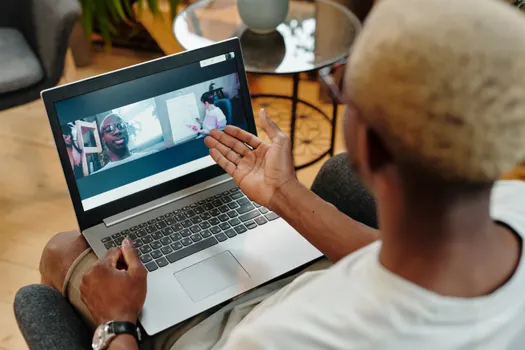
Online relationship counseling is couples therapy with a licensed therapist over video, phone or messaging instead of in an office. You can join from the same couch or from two different cities. In a small randomised trial, couples who did a six-session program over video improved as much as couples who did it face to face, and their bond with the therapist was just as strong (Kysely and colleagues, 2022). It is often easier to fit around work and children. It is not the right format when there is violence in the relationship or when one partner needs crisis care.
This guide covers how it works, which format to pick, what it costs, the exact questions to ask a counselor, and how to tell after a few sessions whether it is working.
How online relationship counseling works
Most services follow the same path:
- A short intake questionnaire. What brings you in, what you have tried, your schedule and your budget.
- Matching. A platform suggests a counselor, or you choose one from a directory. Ask for someone who specialises in couples, not a general therapist who "also sees couples".
- A first session, often longer. The counselor asks about your history as a couple, what each of you wants to change, and sometimes meets each partner alone once.
- Regular sessions. Usually 45 to 60 minutes, weekly or every other week, with small exercises to try in between.
Some platforms add unlimited messaging with your counselor between live sessions. That can help, but live sessions are where most of the work happens.
Video, phone or text: which format?
- Video is closest to being in the room. The counselor can see how you react to each other, which matters a lot in couples work.
- Phone suits couples with poor internet or who find cameras distracting.
- Messaging is flexible and cheaper, but slow for resolving live conflict. It works best as a supplement.
A quick way to decide
- You fight in the moment and it escalates fast: video. The counselor needs to see the escalation to slow it down.
- One of you goes quiet on camera: phone, or video with cameras off for part of the session. Say so at the start.
- You live apart or travel a lot: video from two devices. Check the counselor can legally see clients in both places.
- Your schedules never line up: messaging between sessions, plus one live session a month at minimum.
- You mostly want skills, not a therapist: a structured online program can be a cheaper first step (more on that below).
You do not need to be in the same room. Many couples join from separate devices, which can make it easier to speak honestly. See whether both partners need to be in the same room.
Does online couples counseling really work?
For most couples, yes. In the trial above, 30 couples were randomly assigned to video or face-to-face sessions of the same program. Relationship satisfaction and mental health improved in both groups, with no meaningful difference between them. It was a small study of one structured program, so treat it as encouraging rather than final. What clearly matters is the skill of the counselor, the method they use and whether both partners keep showing up. Our article on whether online couples therapy is as effective as in person goes through the evidence in more depth.
It is less suitable when there is physical violence, coercive control, active addiction or a mental health crisis. In those cases, individual specialist help comes first, and couples work waits until everyone is safe.
What does online relationship counseling cost?
Prices vary a lot by country, platform and counselor, so treat these as orientation and check current pricing yourself:
- Subscription platforms charge weekly or monthly. Talkspace lists couples therapy from $436 a month, with up to four live sessions and unlimited messaging, and extra sessions at $65 each (Talkspace pricing, checked October 2026).
- Private counselors seeing couples online usually charge per session, and specialised couples therapists tend to cost more than generalists.
- Insurance. Some plans cover couples work, often only when it is tied to a diagnosis for one partner. Ask your insurer directly.
- Structured online programs are a cheaper middle ground. OurRelationship, for example, is a self-paced program for couples that says plainly it is self-help, not therapy, and lists a one-time fee, with free access in some regions (OurRelationship, checked October 2026).
For the details, see how much couples therapy costs, whether insurance covers couples therapy and how to find low-cost or free couples counseling online.
How to choose the right online counselor
- Check the license. Look for a licensed marriage and family therapist (LMFT), psychologist, or licensed clinical social worker with specific couples training. In most places they must be licensed where you live.
- Ask about their method. The Gottman method and emotionally focused therapy (EFT) are two of the best-researched couples approaches. A good counselor can explain theirs in plain words.
- Book a consultation call. Many offer a short free one. Notice whether you both feel heard, not just the partner who talks more.
- Agree that both of you are willing. If one partner is reluctant, say so at the start. Counselors deal with this often; read whether couples therapy can work if only one partner wants it.
Questions to ask on the consultation call
Copy these into your notes and ask them word for word:
- "How much of your work is with couples, rather than individuals?"
- "What method do you use, and what would our first three sessions look like?"
- "Are you licensed to see us where we each live?"
- "Do you ever meet each of us alone? What happens to what we tell you privately?"
- "How will we know if this is working, and when would you suggest we stop or change approach?"
A good answer to the last question is specific: a check-in after a set number of sessions, or a short questionnaire you fill in now and again later. A vague answer is not a dealbreaker, but it is worth noticing.
To compare the big platforms side by side, see our review of the best online couples counseling platforms.
What happens in a session
Most sessions follow a similar rhythm: a check-in on the week, a focus on one recent conflict or recurring pattern, a skill to practise, and a small piece of homework. Early sessions are mostly about understanding your pattern; later ones are about changing it.
One skill you will probably meet early is the softened start-up. John Gottman reports that the first three minutes of a conflict conversation predict how it ends 96% of the time (Gottman Institute). So the counselor may stop you after your first sentence and help you rephrase it:
- Harsh: "You never help with anything. I'm sick of it."
- Softened: "I'm exhausted tonight. Could you take bath time so I can sit down for twenty minutes?"
The second version names a feeling and a specific request, with no verdict about the other person. That is the kind of change sessions are built around. For a detailed walkthrough, read what to expect from your first online couples therapy session.
A 20-minute exercise before your first session
Do this once, together, in the week before you start. It turns a vague "we argue a lot" into something a counselor can work with.
- Each pick one recent argument (5 minutes, separately). Write down what set it off, the first thing you said, and what you did next.
- Swap and read (5 minutes). No corrections. Only questions that start with "What did you mean by...".
- Find the loop (5 minutes). Name the pattern in one sentence, for example: "I push to talk, you go quiet, I push harder."
- Write one wish each (5 minutes). Start with "I would like us to be able to...". Bring both sentences to the first session.
If this exercise turns into a fight, stop. That is useful information too; tell the counselor that it happened.
Common mistakes with online counseling
- Joining from the same laptop at the kitchen table, with children in earshot. Neither of you will say the real thing. Use headphones and a closed door, or a parked car.
- Using sessions to win. Arguing your case to the counselor makes the other partner defensive. The counselor is not a judge.
- Skipping the homework. Most change happens between sessions. If the homework is unrealistic, say so and ask for a smaller version.
- Replaying the session in the car or kitchen afterwards. Agree on a cool-down: no relitigating for an hour.
- Quitting after one bad session. Hard sessions are often the useful ones. Judge progress over several weeks, not one evening.
How to tell it is working
After four to six sessions, check these together:
- Arguments still happen, but they end sooner or with a repair ("Can we start that again?").
- You can name your loop when it starts, even if you cannot always stop it.
- Small moments of connection get noticed more often. Gottman's research found that newlyweds who stayed married turned toward each other's bids for attention 86% of the time, against 33% for those who divorced (Gottman Institute).
- Both of you, not only one, feel the counselor understands your side.
If none of these has moved, raise it in session. Changing counselor or method is normal and not a failure.
Who online relationship counseling helps
- Couples stuck in the same argument that never resolves.
- Couples where one partner shuts down during conflict.
- Couples drifting apart after a baby, a move or a job change.
- Couples rebuilding trust after an affair.
- Long-distance couples, for whom online is often the only practical option.
- Couples who are fine but want to stay that way. Therapy is not only for crises.
For a broader overview of counseling in general, see our relationship counseling guide.
Common questions
Is online relationship counseling as good as in-person?
For most couples the outcomes look comparable, based on early trials. The counselor's skill and your commitment matter far more than the format.
Can we do online counseling if we live in different places?
Yes. Each of you can join from your own device. Just check the counselor is licensed to see clients in both locations.
What is the difference between counseling and therapy?
In everyday use the words mean the same thing. Some people use "counseling" for shorter, skills-focused work and "therapy" for deeper or longer work, but for couples the licensed professionals and methods are the same.
What can we do while we wait for a first appointment?
Do the 20-minute exercise above. Knowing your pattern before you arrive makes the first session far more useful.
If it would help to talk this through first, Coupleship lets you start privately with a Gottman-based guide tonight, and nothing is shared until you invite your partner. It is not a substitute for a licensed therapist. Free to start, no card needed.
References
- Couples therapy delivered through videoconferencing: effects on relationship outcomes, mental health and the therapeutic alliance (opens in a new tab) · Kysely A, Bishop B, Kane RT, McDevitt M, De Palma M, Rooney R (2022)
- How much does Talkspace cost? A complete guide to online therapy pricing (opens in a new tab) · Talkspace (2026)
- The 6 things that predict divorce (opens in a new tab) · John Gottman (2026)
- Turn towards instead of away (opens in a new tab) · Zach Brittle (2015)
- OurRelationship online program (opens in a new tab) · OurRelationship (2026)
Filed under relationship counseling online · online couples therapy · online relationship therapist · marriage counseling